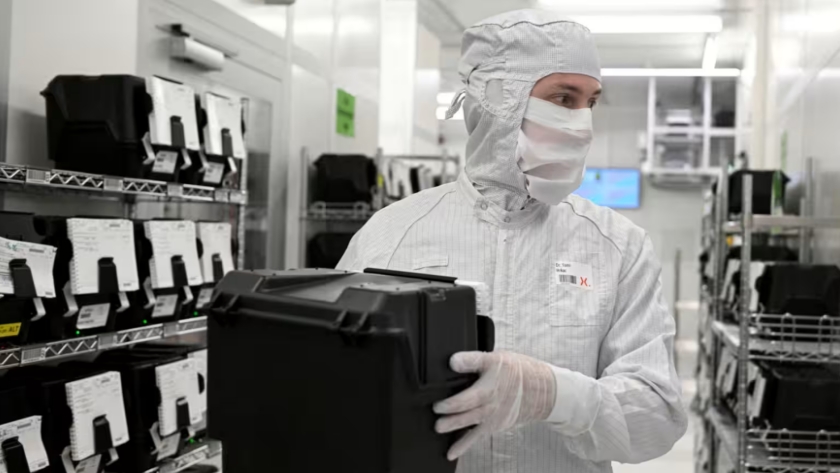
A growing political and regulatory dispute surrounding Nexperia, the Dutch-headquartered chipmaker owned by China’s Wingtech, has underscored Europe’s mounting difficulties as it seeks to reduce strategic dependence on Chinese technology. The company’s operations have come under renewed scrutiny in several EU countries, where officials are weighing tighter national security measures amid geopolitical tensions.
The controversy intensified this week after regulators in multiple member states raised questions about Nexperia’s access to sensitive technologies and its ownership structure. European officials say the case illustrates the complexities of enforcing new security frameworks while balancing industrial competitiveness, supply-chain resilience, and foreign investment rules.
According to the report, wind and solar power, along with advanced storage systems, are poised to become the cornerstones of Europe’s energy strategy in the coming decades. However, achieving this vision will require sustained innovation in engineering and technology. EAE identifies several critical areas for development, including the optimization of renewable energy infrastructure, breakthroughs in battery technology and other energy storage methods, and advancements in smart grid systems that can efficiently integrate distributed energy resources.
In Germany, where Nexperia operates key facilities, lawmakers called for a deeper review of the company’s activities under the country’s updated Foreign Trade and Payments Act. Some politicians argue that Beijing’s influence over Europe’s semiconductor footprint remains “significant and structurally embedded,” despite EU initiatives aimed at securing greater autonomy in chipset production and design.
The United Kingdom is facing similar dilemmas. Its 2022 order forcing Nexperia to divest the Newport Wafer Fab over national security concerns continues to reverberate in political circles. The dispute has become a reference point for European governments trying to navigate the trade-offs between industrial policy and strategic security in an era of rising technological competition.
Nexperia insists it is being unfairly targeted due to geopolitical tensions, saying its European operations follow all regulatory requirements and support thousands of local jobs. The company argued in a statement that a hostile climate toward Chinese-linked firms risks undermining Europe’s semiconductor ambitions by discouraging long-term investment in fabrication and R&D.
Industry experts note that Europe’s reliance on Asian—particularly Chinese—manufacturers remains substantial across multiple layers of the semiconductor supply chain. While the EU Chips Act aims to double Europe’s global semiconductor market share to 20% by 2030, analysts say the region is still heavily dependent on Chinese-controlled suppliers for key components, materials, and assembly capacity.
The Nexperia dispute has rekindled calls within Brussels for more coherent screening mechanisms for foreign investment, as well as stronger coordination among member states. Differences in national approaches, experts say, risk creating regulatory fragmentation that makes Europe less predictable for global investors and less capable of executing a unified technological strategy. For European policymakers, the challenge lies in crafting rules that safeguard national security without slowing industrial growth or fueling a broader rift with China. As the Nexperia case continues to unfold, it has become emblematic of the delicate balance Europe must navigate as it attempts to assert technological sovereignty in a rapidly shifting global landscape..

